
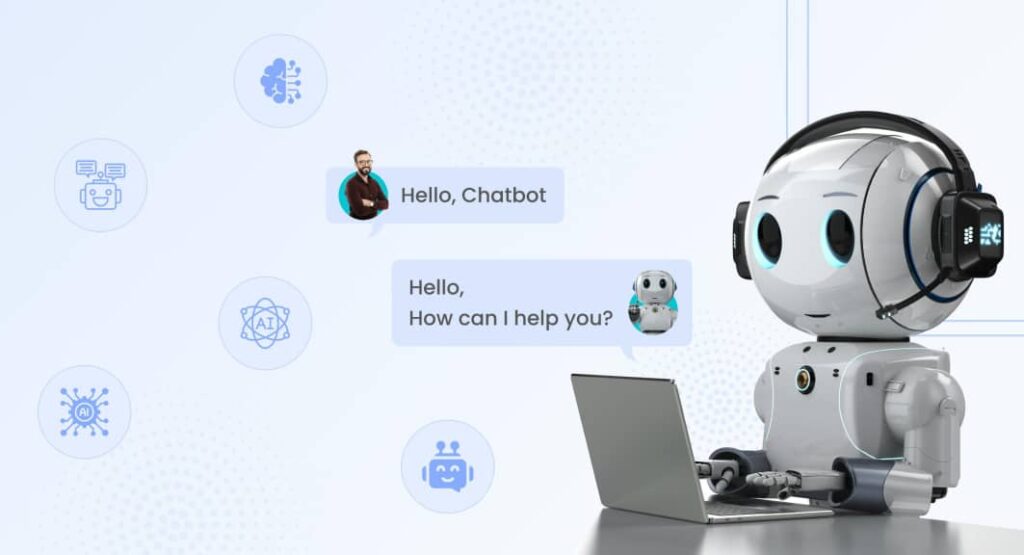
In Nigeria’s bustling hubs such as Lagos and Abuja, small businesses face increasingly demanding customers. These customers expect instant responses and smooth experiences, even outside normal working hours. However, many small and medium-sized enterprises (SMEs) struggle to staff full-time, round-the-clock support desks.
Enter AI chatbots. These are automated conversational agents that respond instantly, tirelessly, and at scale. These tools open a new frontier for SMEs in Lagos and Abuja to deliver exceptional customer service without the traditional cost and headcount burden.
In this article, we’ll explore the challenges local businesses face, explain how AI chatbots work, detail their benefits, show how Lagos/Abuja businesses can implement them, discuss potential obstacles and how to overcome them, and look ahead at how this technology will evolve in Nigeria.
The Customer Service Challenge for Small Businesses
Small businesses in Lagos and Abuja face unique constraints in customer service. They often operate with lean crews and limited hours, which leaves gaps outside standard business times. Many customers expect instant answers—on WhatsApp, Instagram, or the business website—and may switch to competitors if they don’t get them.
Maintaining a full-service desk or a call centre can be cost-prohibitive as salaries, infrastructure, and training all add up. In fast-moving urban markets like Lagos and Abuja, customers often make purchases or enquiries late at night or on weekends; firms that only operate 9-5 miss those opportunities.
Language and cultural diversity also add complexity. Customers may prefer to speak Pidgin, Yoruba, Igbo, or Hausa, yet many manual service systems cater only for standard English. When customers wait too long or feel helpless because no one is available to assist them, businesses risk losing sales, weakening loyalty and negative word-of-mouth. To stay competitive, SMEs need solutions that can scale, respond instantly, and remain affordable.
What is AI Chatbots and How Do They Work?
An AI chatbot is a software agent that interacts with customers via text, sometimes voice, messages, mimicking human conversation. These bots use integrated technologies such as natural-language processing (NLP) and machine learning to understand user queries and deliver appropriate responses.
How they function:
- They parse a customer’s message (for example: “What’s my order status?”) and determine the intent (e.g. “check order status”).
- They pull relevant data, such as customer records, shipment tracking, and product info, then craft a response.
- They can escalate to a human agent if the query is complex or beyond the bot’s capabilities.
Types of chatbots:
- Rule-based bots: These follow pre-defined decision trees (if user says X, respond Y). They are simpler and faster to deploy, but less flexible.
- AI-powered conversational bots: These use machine learning and can learn from past interactions, handle a wider range of inputs, and deliver more natural conversations.
In Nigeria, one sees chatbots being deployed via platforms like WhatsApp, websites, Instagram messaging and other channels that local customers already use. For example, businesses in Nigeria are using chatbots to answer FAQs, confirm orders and provide status updates.
Key Benefits of AI Chatbots for Small Businesses
Deploying AI chatbots brings multiple advantages, especially for SMEs in Lagos and Abuja.
- 24/7 availability: Chatbots never sleep. They can respond any time of day or night, on weekends or holidays, keeping customer engagements alive. This helps capture sales or enquiries outside business hours, reducing missed opportunities.
- Cost efficiency: Automating routine queries means fewer human agents are needed. SMEs can save on salaries, training, and infrastructure. With lower overhead, businesses can reinvest those savings into growth areas.
- Improved response time and satisfaction: Chatbots provide instant answers to common questions (“what time do you open?”, “is this item in stock?”). That reduces wait times that frustrate customers. Faster service boosts customer satisfaction and loyalty.
- Scalability: As the business grows with more enquiries and more customers, chatbots scale easily. They can handle many simultaneous conversations without a linear increase in cost. This means SMEs can grow without being bogged down by service bottlenecks.
- Personalisation and data-driven insights: Advanced bots can access customer data and tailor responses by addressing users by name, remembering preferences, and recommending related products. Chatbots can collect interaction data, such as types of questions asked, time of day, common issues, and help businesses refine FAQs, marketing, and inventory decisions.
- Integration with popular platforms: In Nigeria, many consumers are on WhatsApp, Instagram or local messaging. Chatbots can connect directly with these platforms, meeting customers where they already are. For Lagos/Abuja SMEs, this means minimal change in customer behaviour and smooth adoption.
Overall, chatbots unlock service improvements and operational efficiencies—making them a game-changer for SMEs in Nigeria.
How Businesses in Lagos and Abuja Can Implement Chatbots

Here is a step-by-step roadmap to roll out chatbot-based 24/7 customer service for small businesses in Lagos or Abuja.
Identify your customer service pain-points
List the most frequent customer questions (e.g., “Are you open now?”, “When will my order arrive?”, “Do you have this size?”). Note the times when most inquiries occur (evenings? weekends?). Pinpoint areas where humans struggle (high volume, repetitive tasks).
Choose the right platform.
Decide where your customers interact most: WhatsApp, Instagram DM, website chat widget, Facebook Messenger. For Lagos/Abuja SMEs, WhatsApp Business API is often a good choice because many Nigerians already use WhatsApp widely. Ensure the platform supports chatbot integration.
Select a chatbot solution provider.
Compare local and international providers: cost, language support, ease of integration, and maintenance. Considering Nigeria, pick a provider who understands local context: Nigerian English, Pidgin, local holidays, etc. Check for channel support (WhatsApp, SMS, website chat) and scalability options.
Design the chat flow and responses.
Map out key conversation flows: greeting, main menu (e.g., shop info/order status/returns), FAQ responses, escalation to human agent. Write responses in friendly, local-tone language (maybe include Pidgin or local expressions if appropriate). Ensure a fallback option for when the bot doesn’t understand; it must escalate to a human or ask a clarifying question. Think of multilingual support if your customer base is diverse (English + Pidgin + Yoruba/Hausa/Igbo).
Train and test the bot.
Feed your FAQ data into the bot, test sample conversations across different scenarios. Use the pilot phase: monitor how customers interact, what questions the bot fails to answer, and refine accordingly. Get human agents to review bot transcripts, spot awkward responses, and refine flows.
Integrate with your systems.
If you have a CRM (customer database) or inventory system, integrate it so the bot can pull order status, product availability, and customer profile. For sales, integrate payment confirmation or appointment scheduling if relevant. Ensure data security and privacy: customer data should be handled appropriately, according to local laws or best practices.
Monitor, optimise and scale.
Track KPIs: response times, number of conversations handled by bot vs humans, customer feedback, conversion rate from bot interactions. Refine bot scripts based on analytics: common new questions, misunderstandings, and language issues. Expand features gradually: after FAQs, you might add payment tracking, order changes, and upselling. Train staff and adjust internal processes: human agents may now deal with more complex issues, while bots handle routine ones.
By following these steps, Lagos and Abuja SMEs can deploy an effective chatbot solution that offers 24/7 support, improves customer satisfaction, and keeps costs manageable.
Potential Challenges and How to Overcome Them
Implementing chatbots is not without obstacles. Small businesses in Nigeria should prepare for and mitigate the following:
Technical and cost barriers
While chatbots reduce long-term cost, initial setup (platform fee, integration, design) may require investment. Solution: Choose modular deployment—start with a basic FAQ bot, then expand features gradually. Use local providers who understand Nigeria’s infrastructure and cost structures.
Language, tone and cultural mismatch
Nigerian customers may use Pidgin, local idioms or informal English; many bots struggle with that. Solution: Use a provider with multilingual and local-language capability, design bot responses with local phrasing, and test with real customers.
Internet reliability and platform dependence
In Lagos/Abuja, some users may face intermittent internet access; some customers may rely on WhatsApp, SMS or voice rather than web chat. Solution: Ensure bot works across platforms (WhatsApp, SMS fallback), design for low-bandwidth usage, and offline fallback options (e.g., human call-back).
Customer scepticism and user adoption
Some customers dislike bots or abandon them if they feel “trapped” or get poor responses. Indeed, the Wall Street Journal showed that only 16% of consumers reported regular bot use, and many prefer humans. Solution: Be transparent about the bot’s role (“Hi, I’m your assistant—if I can’t help, I’ll get you to a human”), ensure smooth handover to a human agent, iterate on bot performance focusing on customer experience, not just cost-cutting.
Ensuring data privacy and security
Bots often handle customer data (names, orders, contact info). SMEs must safeguard this and comply with any local regulations. Solution: Choose a provider with strong data security credentials, train staff on privacy, and make sure you have a clear privacy policy.
The Future of AI Chatbots in the Nigerian Small Business Ecosystem
The horizon for chatbot technology in Nigeria looks promising. Several key trends stand out:
- More local-language support: Bots will increasingly understand and reply in Pidgin, Yoruba, Igbo, Hausa, making them more accessible and inclusive.
- Voice-enabled bots: With growing smartphone/voice-assistant use, bots may adopt voice input and output, enabling hands-free service.
- Deeper integration with fintech and e-commerce: Bots might handle payments, link with inventory, trigger delivery workflows—all in one conversation.
- Smarter AI and personalisation: Using customer data, bots will deliver proactive suggestions, remember past purchases and anticipate next needs—improving upsell and retention.
- Hybrid human-bot models: Rather than replacing humans entirely, chatbots will handle routine tasks while human agents focus on complex interactions—yielding the best of both worlds.
For SMEs in Lagos and Abuja, this means that implementing chatbots now positions them ahead of the competition as technology uptake increases. Early adopters can refine workflows, learn from experience and build stronger relationships with customers.
Conclusion
For small businesses in Lagos and Abuja, delivering top-notch customer service around the clock once seemed costly and labour-intensive. But with AI chatbots, the map has changed. These bots offer 24/7 support, handle high volumes of routine queries, scale with your business, reduce costs and personalise interactions—all while integrating with popular channels such as WhatsApp and Instagram.
By following a structured implementation path like identifying pain points, choosing a platform, designing the flow, training the bot, integrating systems, and monitoring results, an SME can bring this technology into play without disruption. Yes, challenges remain (language, technology, customer trust), but businesses that address them proactively will gain a competitive edge.
As chatbot technology continues to evolve in Nigeria—with more local-language support, voice features, and deeper integrations—the time to act is now!
If your business in Lagos or Abuja is still relying solely on manual customer service and missing out on after-hours engagements, consider deploying a chatbot pilot this year or the next. Start small. Learn, optimise. Let the bot engage your customers while you focus on growing your core business.