
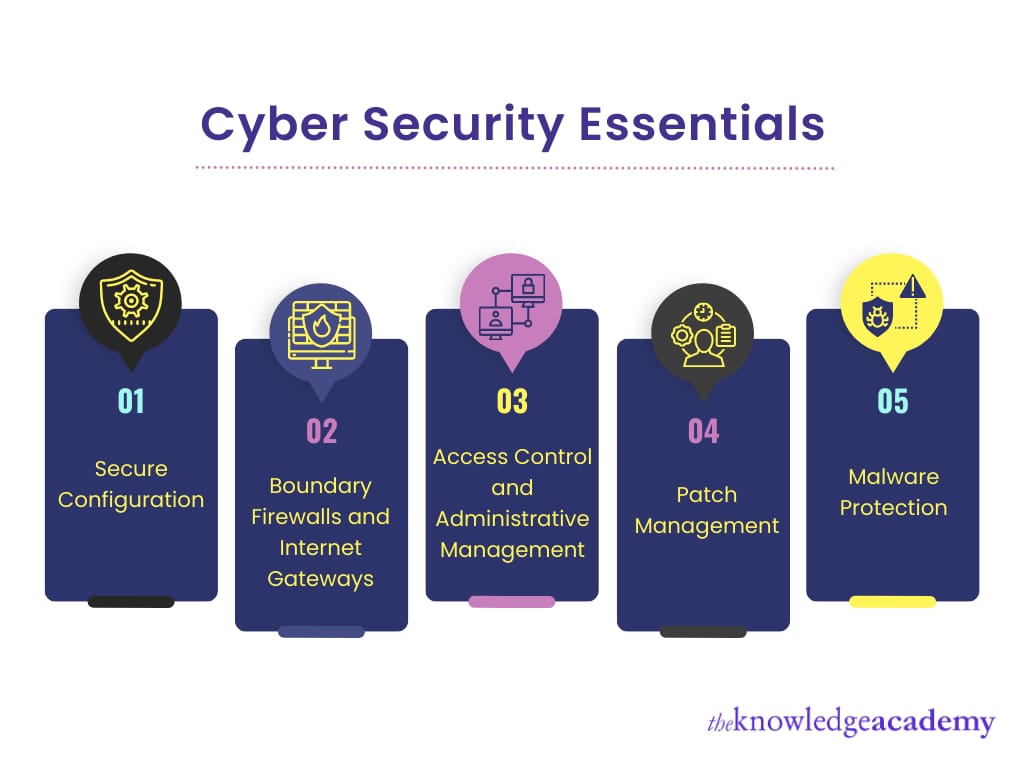
Today’s custom web development projects, especially for organisations of medium to large size, face a rapidly evolving threat environment. Attackers grow more sophisticated, and the consequences of a breach — both financial and reputational — can be severe. When a project scales, integrates complex services or becomes a mission-critical asset, its attractiveness as a target increases.
Thus, security must no longer remain an afterthought or bolt-on; it must take centre stage from architecture to deployment. This article outlines the core cybersecurity must-haves for a custom web development project, emphasising three key trends: blockchain-based security, enhanced data privacy, and API-First secure design. You’ll gain a structured security framework tailored for sizeable projects, with actionable steps and strategic perspectives.
Foundational Security Principles in Custom Web Development
Before diving into trend-specific techniques, developers and project leaders must establish a strong security foundation.
Security by Design
Embed security from the very earliest phases of the project: requirement gathering, architecture design, and technology selection. For example, threat modelling should occur before the first line of code is written. Incorporate a Secure Software Development Lifecycle (SDL) that enforces security checkpoints at each sprint or milestone.
Zero-Trust Architecture
Apply the principle of “never trust, always verify” across system boundaries. Design the network, microservices, and data access with segmentation and least-privilege in mind. Assume internal systems may be compromised, and enforce identity and access controls accordingly.
Continuous Monitoring & Proactive Detection
Deploy tools and processes that continuously scan for vulnerabilities, monitor traffic anomalies, log security-relevant events, and trigger alerts in near-real time. A static “scan once and deploy” mindset won’t suffice in this dynamic threat landscape.
These foundational principles underpin every aspect of large-scale web development security. They set the stage for the more advanced trends we cover next.
Data Privacy and Protection
Data has become the crown jewel of many web applications, especially in enterprise-level projects. Ensuring privacy and protection of that data is non-negotiable.
Encryption everywhere
Encrypt data at rest, in transit and, where possible, even in use. For data at rest, such as databases and storage volumes, implement full disk encryption, table or column-level encryption, and secure key management. For data in transit, enforce TLS 1.3 or equivalent, and prevent any plaintext-sensitive data exchanges. Emerging technologies such as homomorphic encryption and confidential computing support scenarios where the data remains encrypted while processing.
Compliance readiness and privacy-first design
Large projects must align with global regulatory frameworks (e.g., General Data Protection Regulation (GDPR), California Consumer Privacy Act (CCPA), regional laws) and demonstrate accountability. By 2025, data protection laws will span a majority of jurisdictions. Applying privacy-by-design (PbD) means integrating privacy considerations into architecture, not waiting until deployment.
Secure authentication and authorisation
Use modern identity standards such as OAuth 2.0, OpenID Connect, and JSON Web Tokens (JWT). Implement multi-factor authentication (MFA) and adaptive authentication for high-risk actions. As noted in Practical DevSecOps, strong authentication and least-privilege authorisation are key.
Minimisation, lifecycle and de-identification
Collect only the data you truly need (data minimisation) and store it only as long as needed. Anonymise or pseudonymise personal data where possible. Ensure that deletion and archival policies are clearly defined and enforced.
In sum, treating data as a strategic asset, not just a technical artefact, ensures that your project delivers value while sustaining trust.
Blockchain-Based Solutions for Enhanced Security
For mid-to-large web projects that demand high integrity, trust, and decentralised resilience, blockchain-based techniques offer compelling benefits.
Blockchain’s core strengths—immutability, decentralised consensus, cryptographically-linked records—make it suited for scenarios where auditability, tamper-resistance and distributed trust matter. Codingbrushup notes that integrating blockchain into web apps enhances architectural security. Real-world uses include tamper-proof logs, decentralised identity verification and supply-chain traceability.
Key use-cases in custom web projects
- Identity and access management: Use blockchain or distributed ledger to store identity proofs, enabling stronger authentication, user-controlled identity (e.g., DID).
- Secure data exchange and audit logs: Blockchain can record events immutably, making tampering harder and providing clear forensic trails.
- Smart contracts for enforcing security/compliance: Automated rules on the ledger can help enforce that certain operations occur only under defined conditions (e.g., access only if user consent is obtained).
Implementation considerations and limitations
Blockchain is not a panacea. Large-scale web apps must balance performance, scalability and complexity:
- Ensure you choose the right type of ledger (public, private, permissioned) suited to your trust model.
- Consider throughput and latency: many blockchain networks carry higher overhead than traditional databases.
- Audit smart contracts and verify them formally: vulnerabilities in contracts or consensus mechanisms remain real.
- Integrate with legacy systems and existing identity infrastructure: Bridging conventional services to blockchain must be handled carefully.
When applied appropriately, blockchain elements elevate the security posture of your custom web project beyond standard approaches.
Secure API-First Design: Protecting the Backbone of Modern Web Apps
In large web systems, APIs form the backbone through which front-ends, microservices, mobile apps, third-party integrations and partner systems interact. Securing this backbone is critical.
The rise of API-First development
Modern architectures increasingly adopt an API-First approach: define your APIs (schema, contracts, versioning) ahead of internal implementation, treat them as first-class products, and ensure they protect sensitive operations and data flows. That mindset enables scalability, modularity and robust integration.
Common API vulnerabilities
APIs expose an expanded attack surface compared to traditional web apps. Risks include broken authentication, Broken Object Level Authorisation (BOLA), excessive data exposure, injection via API parameters, and misconfigured gateways.
API security best practices
- Use strong authentication/authorisation: OAuth 2.0, JWTs, mutual TLS for internal service-to-service calls.
- Encrypt all traffic and sensitive payloads: enforce HTTPS everywhere, TLS 1.3 as minimum.
- Input validation and sanitisation: treat APIs like exposed surfaces—sanitise every parameter, use allowlists over failists.
- Rate limiting, throttling and abuse detection: prevent API misuse, bots, scraping, and denial-of-service.
- Continuous API discovery and monitoring: identify “shadow APIs” (unmonitored endpoints) and “zombie APIs” (unused but alive) and remove or secure them.
- Shift-Left security: embed API security into CI/CD pipelines—run static analysis, fuzzing, contract validation, security tests before deployment.
By treating API security as foundational, not optional, high-value web systems avoid cascading breaches that can stem from weak endpoints.
Advanced Cybersecurity Measures for Large-Scale Projects
When your web project attains significant scale, complexity and enterprise impact, you must layer advanced security measures on top of the foundations.
AI and Machine Learning for Threat Detection
As threat volumes and sophistication increase, manual rules no longer suffice. Leverage AI/ML-based systems that learn normal behavioural baselines, detect anomalies, and deliver faster insights. For APIs in 2025 and beyond, AI-driven detection will become standard.
Cloud Security Optimisation
Most large projects operate in hybrid or multi-cloud environments. Design around the shared responsibility model: configure IAM roles, network segmentation, secure defaults, continuous compliance scanning, and infrastructure-as-code with embedded security.
DevSecOps and Security Automation
Embed security checks into your DevOps pipeline: automatically test for code vulnerabilities, dependency issues, misconfigurations, secrets in code, and enforce security gates before deployment. That ensures security scales with velocity.
Incident Response and Recovery Planning
Assume breach. Build an incident response plan: detection, containment, eradication, recovery, lessons learned. Design your architecture for resilience: backups, fail-safe mechanisms, quick rollout of patches and fixes.
These advanced measures ensure your large-scale project not only resists attacks but also recovers faster and reliably.
Future Trends and Emerging Technologies in Cybersecurity
To stay ahead, consider these emerging trends that will shape web development security beyond 2025.
- Quantum-Resistant Cryptography: Quantum computing poses a threat to classical cryptographic algorithms. Early adoption of lattice-based or post-quantum cryptography becomes relevant for long-lived systems.
- Decentralised Identity (DID) Systems: More projects will adopt user-controlled identity models, powered by blockchain or distributed ledger, reducing reliance on centralised identity providers and mitigating identity-theft risks.
- Security Mesh Architectures: Rather than a central hardened perimeter, security becomes woven throughout services, endpoints, APIs, and data flows—a “mesh” of security controls adapted to distributed, cloud-native systems.
By tracking these trends, your project stays ahead of the curve rather than reacting to the latest breach.
Conclusion
In today’s environment, security is not a cost centre—it’s a differentiator. A well-secured custom web development project can earn trust, enable quicker time to market, avoid major outage or breach costs, and serve as a foundation for growth. When a mid-to-large custom web project embeds these cybersecurity must-haves, it gains both resilience and trust—an edge in a world where security breaches dominate headlines and customer expectations are high.
Need a functional and professionally designed website? Let Bozng help you build a professional, functional, SEO optimized website to grow your business.