
Local businesses often operate on tight budgets, so every investment demands justification. One area that sometimes gets overlooked is web design. Yet in today’s digital-first environment, a website doesn’t serve just as an online brochure—it acts as your 24/7 storefront, sales funnel, and trust builder. Investing in an affordable, well-designed website can deliver measurable returns. This article explains how local businesses can achieve a meaningful return on investment (ROI) from affordable web design, what that ROI looks like in practical terms, and how to set yourself up for success.
Understanding ROI in Web Design
When we mention ROI in web design, we ask: For every dollar spent, what return did we get? In the context of a website, that return may take the form of extra leads, higher conversion rates, increased foot-traffic (for local stores), better brand perception, or lower maintenance costs. A simple way to look at it is to subtract the cost of your site and ongoing maintenance from the revenue or value it generates, then divide by that cost.
Let’s say you spend $1,000 on a website redesign and, as a result, you secure $4,000 in net new business you wouldn’t have captured otherwise—that gives you a net of $3,000, which translates to an ROI of 300%. Evomira show figures in this range when design and UX improve meaningfully.
Crucially, ROI isn’t just a one-time snapshot. A website remains in operation year after year. If you build it well and maintain it, the returns continue. That’s why even an affordable investment can compound into a strong business asset.
The Value of a Well-Designed Website for Local Businesses
First impressions and credibility
Visitors form an opinion about your business within milliseconds of landing on your website. WifiTalents mentions that up to 94% of first impressions are related to design. ONCE Interactive reports 75% of users judge a business’s credibility by how its website looks. For local businesses such as a café, a service provider or a retail shop, this matters a lot. If your website appears outdated or confusing, potential customers might assume your business is likewise outdated or less professional.
User experience (UX) and navigation
A good design goes beyond looks. It ensures visitors find what they seek quickly, navigate without frustration, and take action (call, book, visit). Poor user experience (UX) leads to high bounce rates and lost opportunities. For example, a confusing layout can lose visitors before they even explore your services. Research shows 38% of visitors won’t engage further if a layout is unattractive. Those lost seconds translate to lost walk-in visits, lost calls, lost bookings.
Mobile responsiveness & accessibility
More than 60% of global website traffic now comes from mobile devices. If your site does not perform well on mobile, you lose a huge audience. Local businesses especially benefit, because many “near me” searches happen on mobile. A mobile-friendly, fast website helps ensure you show up and keep visitors.
Search engine visibility (SEO)
Website design impacts Search Engine Optimisation(SEO). A well-structured site with clean code, quick load times, mobile-friendliness and good UX supports better rankings. Local businesses that show up in local search (e.g., “plumber Lagos”, “hair salon Ikeja”) reach more customers. M4 Digital Marketing indicates that for local search campaigns, ROI can reach 500% or more.
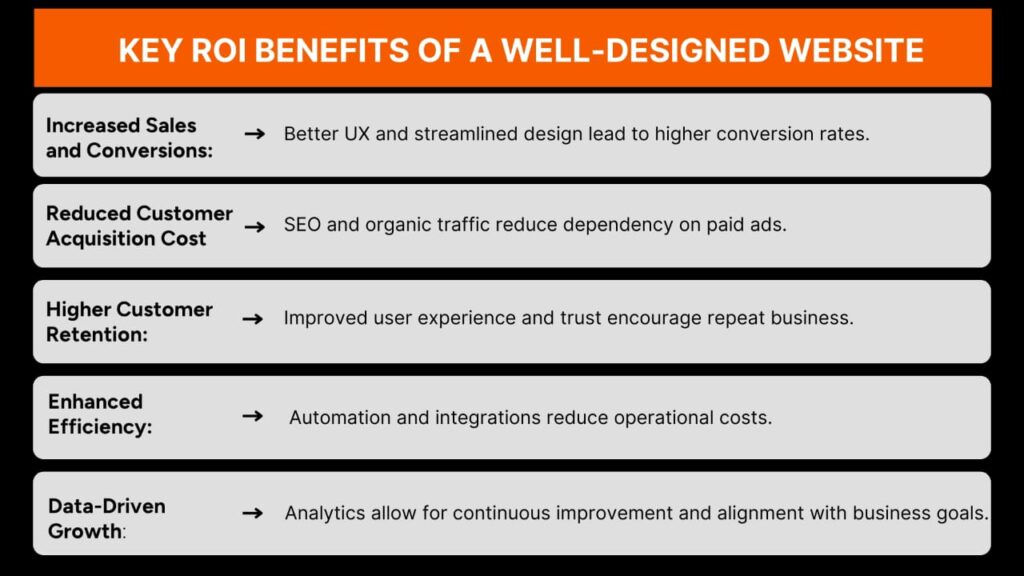
These value elements converge: better design leads to higher traffic, better conversions, stronger brand perception and thus higher revenue or business outcomes.
The Cost Factor: Affordable Doesn’t Mean Low Quality
When we say “affordable web design”, we do not mean “cheap, thrown-together”. We mean cost-effective—wisely chosen, fit-for-purpose, and aligned with business goals. Local businesses can strike a balance by focusing on essentials such as, a clear homepage, service pages, contact info, strong imagery, responsive layout, and consistent branding.
SQ Magazine shows that many small businesses invest between modest budgets for their sites (for example, 13.9% spent $1,001-$2,500), which still achieves good results when executed well. Choosing a local web designer or small agency can help reduce overheads, shorten turnaround time and get better alignment with your market and budget.
Furthermore, you must avoid risk by ignoring mobile responsiveness, failing to include clear calls-to-action, and skipping local SEO—all these save cost upfront but hamper ROI. The key is to invest smartly rather than just minimally.
Measuring ROI from Affordable Web Design
To understand how your website investment pays off, you must measure the right things. Firstly, track website traffic, especially from local or relevant searches. Then measure conversion rate—what percentage of visitors take desired actions (call, book, buy, visit). For local businesses, include offline conversions (walk-ins, phone bookings) attributed to website lead capture.
Digital Authority Partners shows that localised websites can convert at 12-18% versus 4-6% for non-localised ones. Moreover, Troov Marketing shows that professional redesigns can lift conversions, leads and revenue by 20-300%.
Maintain a simple calculation: (Revenue attributed to site – Cost) ÷ Cost = ROI. Suppose your website redesign costs USD $2,000 and over the next year you identify $8,000 in new business directly from online leads you otherwise wouldn’t have captured:
(8,000-2,000) ÷ 2,000 = 3, or 300% ROI.
Also track ongoing metrics, including bounce rate, average session duration, mobile conversion rate, and organic search position. These tell you if the website continues delivering. DesignRush reported a session duration more than doubling after a UX redesign.
For local businesses, linking online leads to offline behaviour can be trickier but vital. Use unique phone numbers for website traffic, track form submissions, ask new customers “how did you hear about us?”, and integrate booking tools. When you tie website activity to real business outcomes, you’ll clearly see ROI.
Strategies to Maximise ROI on a Budget
- Focus your investment where it matters most. Prioritise the homepage, services pages, about/contact pages and a clear call-to-action (CTA). Many small business websites lack a CTA on the homepage—around 70% according to one source.
- Ensure the site is mobile-friendly, loads fast, and has simple navigation. These factors directly affect usability and conversion. Template-based or builder-platform websites can serve well when customised and maintained.
- Use local SEO as a cost-effective lever. For local businesses, ranking in local search and having online reviews matter a lot. Research emphasises how local SEO campaigns can achieve an ROI of 500% or more.
- Maintain the website. Affordable doesn’t mean “set and forget”. Keep your content fresh, update images, optimise calls to action, and review analytics quarterly. Over time, small improvements build compounding ROI.
- Choose a web designer who understands your local market and your business. A locally-based web design agency offers advantages, including lower travel/overhead costs, better understanding of your customer base, and more flexible payment arrangements.
- Finally, tie the website to your overall marketing. Your site should integrate with your social media, local listing profiles (e.g., Google Business Profile), signage, and offline promotions. This integration amplifies web design ROI.
The Long-Term Payoff of Affordable Web Design
Investing smart in affordable web design creates more than immediate returns. It lays the foundation for long-term business growth. Because your website remains your digital asset, every improvement adds value. As traffic grows, conversions optimise, and brand recognition builds, the same website continues to drive outcomes for years.
Moreover, by starting with a cost-effective solution, you free up budget for additional marketing tactics—such as local ads, content marketing, or social campaigns. That synergy multiplies your returns.
One important mindset shift: view the website as an investment, not a cost. When you treat it as a tool that actively generates revenue and supports your business operations, decisions about budget, updates, and optimisation become strategic rather than optional.
Over time, you outrun the competition. Many local businesses still rely solely on social media or basic web pages. By having a proper website, you differentiate yourself, build trust, and capture customers who might never have discovered you otherwise.
Conclusion
For local businesses, affordable web design offers real, measurable ROI. Focus on creating a website that looks professional, functions smoothly, caters to mobile users, and aligns with your local market. Measure traffic, conversions and link them back to your real business outcomes. Start with budget-smart design, maintain it, and integrate it into your broader marketing. The result: a website that pays for itself—and then some.
If you’re ready to move forward, the first step is simple: audit your current website (or absence of one) and identify where the biggest leaks in conversion or credibility lie. Then invest wisely in the solution—and watch your local business grow.