

The digital advertising world has reached a crossroads. Third-party cookies are fading, privacy regulations are tightening, and consumer trust is more fragile than ever. In response, a new generation of advertising has emerged—Contextual Advertising 2.0—powered by artificial intelligence that understands true intent, tone, and semantic meaning. This evolution promises highly relevant ad placement without collecting personal data, surpassing the performance of traditional retargeting and aligning with the privacy-first ethos of the modern web.
For more than a decade, the digital advertising industry leaned on behavioural targeting. Cookies, tracking pixels, and user profiles formed the backbone of strategies designed to serve ads based on people’s past online behaviour. But with browsers dropping support for third-party cookies and regulators enforcing stronger privacy rules, this infrastructure is crumbling.
Contextual advertising isn’t new. Ads placed next to related content have existed since the early days of the web, but AI has transformed it from a blunt matching tool into a rich understanding of intent and relevance. Instead of asking “Who is this user?” advertisers now ask, “What is the user doing right now?” and “What meaning does this content convey?”
A New Definition of Relevance
Classic contextual ads scanned for simple keywords. An article containing the word “shoes” might trigger any footwear ad, regardless of the subject’s actual meaning. Modern AI, however, digests content like a human reader. It uses natural language processing (NLP) to analyze whole sentences and semantic structures, not just isolated tokens. This means it can detect whether a page is comparing running shoes, reviewing hiking boots, or discussing foot anatomy, and place ads in the context that matches true intent and tone.
Beyond text, advanced systems use multimodal analysis that interprets images, metadata, and even video content to understand context across formats. The goal is consistent: find moments of high intent where the user is receptive, and align ads with those moments.
How AI Reads Intent
Artificial intelligence transforms content analysis into a real-time understanding of what users care about, what phase of a decision they’re in, and how likely they are to engage with an offer.
Semantic Analysis and Topic Modelling
AI evaluates the full meaning of a web page, not just surface keywords. Topic modelling creates a representation of a page’s themes and distinguishes subtle differences, such as telling “Jaguar the animal” from “Jaguar the car brand”, leading to more accurate ad placement.
Tone and Sentiment Detection
The tone of a page shapes how users interpret ads. An AI system that detects whether content is positive, critical, urgent, or informational lets advertisers place ads that fit the mood and expectations of readers. This prevents jarring mismatches that reduce engagement and brand affinity.
Intent Classification
Intent isn’t binary. AI categorises pages to identify whether someone is exploring options, comparing products, or ready to convert. Brands can rank content by likely conversion value and choose where to place their ads based on strategic goals.
Continuous Learning and Optimization
AI doesn’t stop at placement. It measures how ads perform in real time and refines its models. Impressions, click-through patterns, time on page and conversions feed back into the system. Over time, the AI becomes better at predicting which placements yield the highest return on investment.
Why Contextual AI Often Outperforms Retargeting
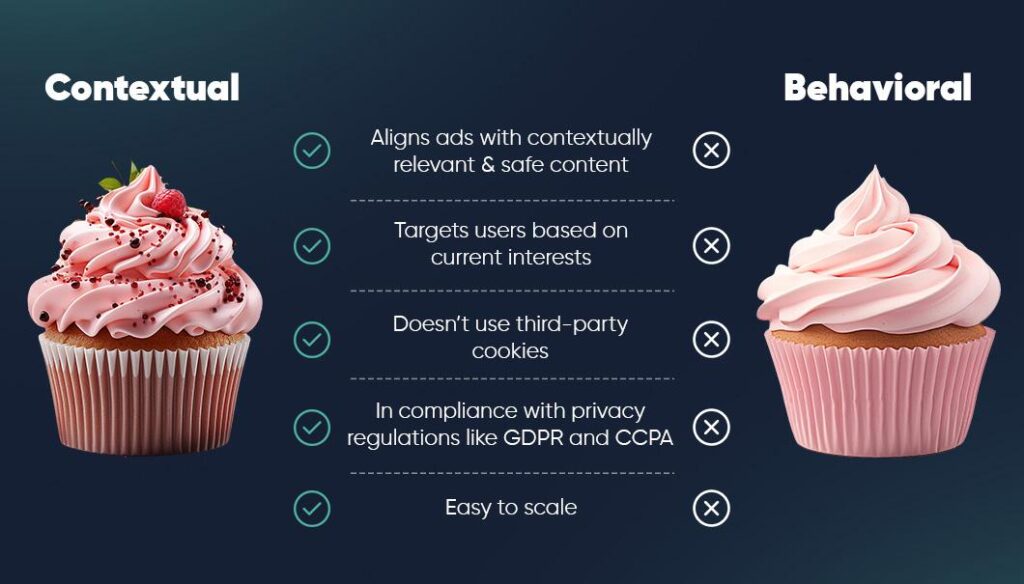
Retargeting depends on identifying users and following them across the web; contextual AI focuses on where they are now. That focus delivers several advantages:
- Immediate intent over historical behavior: Ads appear when a user is actively engaged with relevant content—not based on something they clicked days or weeks earlier. This timing often results in higher engagement and conversion rates.
- Higher relevance without intrusion: Users don’t experience ads as invasive “follow me around” banners. Instead, ads complement the content they are already consuming. This alignment boosts trust and satisfaction.
- Reduced waste and cost efficiency: Studies show that contextual AI can outperform traditional third-party segment targeting and retargeting in cost per acquisition metrics because it focuses on relevance at the moment of consumption.
- Improved brand safety: Placing ads next to contextually suitable content safeguards a brand’s reputation. At a time when consumers quickly abandon brands placed near unsafe or irrelevant content, this protection matters.
Privacy by Design
The privacy advantage of AI-driven contextual advertising isn’t incidental—it’s structural. By design, these systems don’t collect or rely on personal identifiers. They analyse the content itself, not the person consuming it. This distinction makes contextual AI compliant with regulations such as GDPR and CCPA and future-proof against evolving privacy legislation.
Advertisers no longer need consent banners or worry about data transfers. They can focus on creating high-quality contextual placements while AI handles the matching. This reduces liability and builds trust with consumers who increasingly reject intrusive tracking.
Technology Under the Hood
At the centre of Contextual Advertising lies a mix of advanced technologies:
- Natural Language Processing (NLP): Reads and interprets text with human-like depth.
- Semantic Matching: Creates connections between content meaning and ad messages.
- Predictive Intent Models: Anticipate user readiness to engage or purchase.
- Real-Time Scoring: Rates pages on relevance, sentiment, and performance potential in milliseconds.
Together, these systems handle millions of pages across the open web and real-time platforms like AI assistants, ensuring ads appear in environments that genuinely match intention.
Challenges and Strategic Considerations
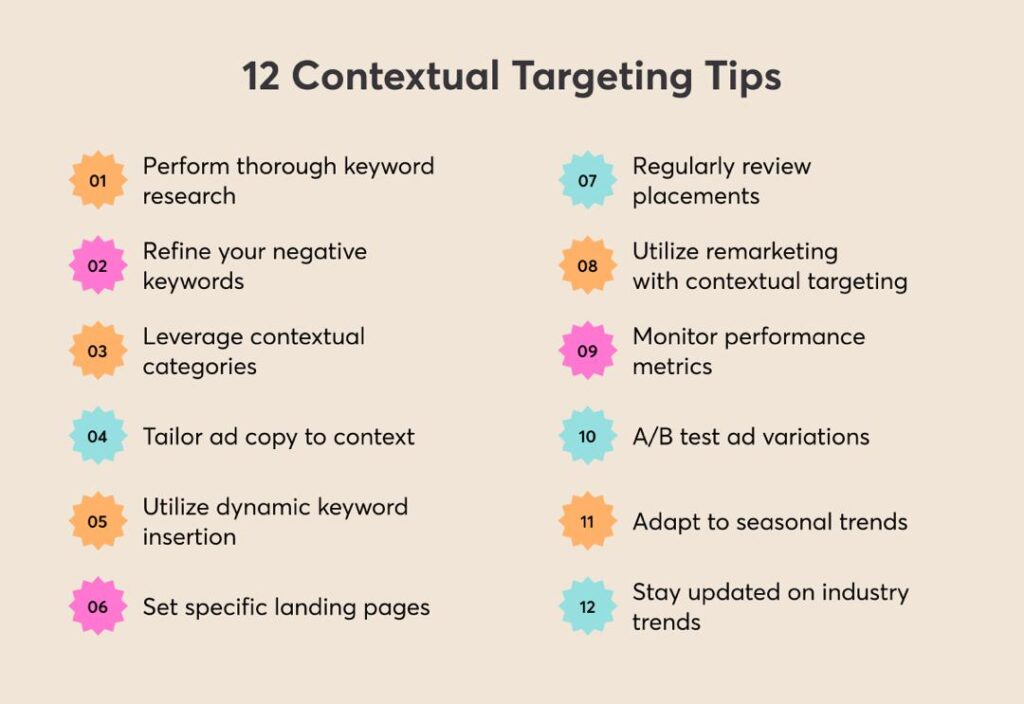
Even with its promise, Contextual Advertising has hurdles:
Advertisers need high-quality training data and well-defined objectives. AI models must be attuned to distinguish between nuanced topics and avoid false positives, such as confusing humour or sarcasm for intent. Team expertise remains crucial, and hybrid strategies that combine first-party data with contextual insights often yield the best results.
Success metrics evolve with this new model. Click-through rates and conversions matter, but so do measures of engagement quality, such as scroll depth and time on page. Brands also track intent alignment scores, assessing how closely ad placements match the semantic signals of content. These nuanced KPIs give advertisers a clearer view of campaign performance in a privacy-first context.
The Future of Advertising
As the web becomes more privacy-regulated, advertisers who embrace AI-driven contextual strategies position themselves for sustainable growth. Instead of chasing identifiers, they tap human-like understanding of content and intent, delivering ads that feel timely, respectful, and relevant.
Contextual Advertising doesn’t just replace old methods—it redefines relevance for a world where privacy and performance go hand in hand. In this new era, intent becomes the currency of connection, and AI the engine that makes it possible.